SUBSCRIBE
SUBSCRIBE
EXPLORE +
  • About infoDOCKET
  • Academic Libraries on LJ
  • Research on LJ
  • News on LJ
  • Skip to primary navigation
  • Skip to main content
  • Skip to primary sidebar
  • Libraries
    • Academic Libraries
    • Government Libraries
    • National Libraries
    • Public Libraries
  • Companies (Publishers/Vendors)
    • EBSCO
    • Elsevier
    • Ex Libris
    • Frontiers
    • Gale
    • PLOS
    • Scholastic
  • New Resources
    • Dashboards
    • Data Files
    • Digital Collections
    • Digital Preservation
    • Interactive Tools
    • Maps
    • Other
    • Podcasts
    • Productivity
  • New Research
    • Conference Presentations
    • Journal Articles
    • Lecture
    • New Issue
    • Reports
  • Topics
    • Archives & Special Collections
    • Associations & Organizations
    • Awards
    • Funding
    • Interviews
    • Jobs
    • Management & Leadership
    • News
    • Patrons & Users
    • Preservation
    • Profiles
    • Publishing
    • Roundup
    • Scholarly Communications
      • Open Access

May 24, 2024 by Gary Price

Research Article (Preprint): “How Researchers Use Open Science”

May 24, 2024 by Gary Price

The research article (preprint) linked below was recently posted on SSRN.

Title

How Researchers Use Open Science

Authors

Stephanie Permut
Carnegie Mellon University

Silvia Saccardo
Carnegie Mellon University, Department of Social and Decision Sciences

Gretchen Chapman
Carnegie Mellon University

Source

SSRN
Posted: 23 May 2024

DOI: 10.2139/ssrn.4838469

Abstract

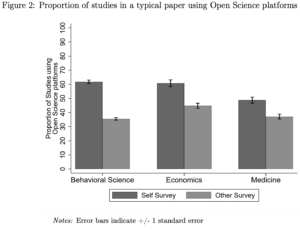
The Open Science Revolution of the past two decades has shed light on the questionable research practices (QRPs) credited for low rates of replicability in medical research, the behavioral sciences, and economics. In response, Open Science platforms were developed to allow researchers to commit to pre-specified research plans and make study materials, data, and code publicly available. A survey (N=1,402) of behavioral scientists, economists, and medical scientists explores how engagement with QRPs has changed following pivotal studies addressing the replicability crisis and whether such engagement varies across disciplines. The results show that although the prevalence of QRPs has declined compared to the results from (John et al., 2012), researchers report using Open Science platforms in ways that undermine their effectiveness. Furthermore, there are some disciplinary differences in the types of Open Science behaviors researchers practice.

Source: 10.2139/ssrn.4838469

Access to Abstract, Link to Full Text

Direct to Full Text 
45 pages; PDF.

Filed under: Data Files, News, Open Access

SHARE:

About Gary Price

Gary Price (gprice@gmail.com) is a librarian, writer, consultant, and frequent conference speaker based in the Washington D.C. metro area. He earned his MLIS degree from Wayne State University in Detroit. Price has won several awards including the SLA Innovations in Technology Award and Alumnus of the Year from the Wayne St. University Library and Information Science Program. From 2006-2009 he was Director of Online Information Services at Ask.com.


ADVERTISEMENT

Archives

Job Zone

ADVERTISEMENT

Related Infodocket Posts

ADVERTISEMENT

FOLLOW US ON X

Tweets by infoDOCKET

ADVERTISEMENT

This coverage is free for all visitors. Your support makes this possible.

This coverage is free for all visitors. Your support makes this possible.

Primary Sidebar

  • News
  • Reviews+
  • Technology
  • Programs+
  • Design
  • Leadership
  • People
  • COVID-19
  • Advocacy
  • Opinion
  • INFOdocket
  • Job Zone

Reviews+

  • Booklists
  • Prepub Alert
  • Book Pulse
  • Media
  • Readers' Advisory
  • Self-Published Books
  • Review Submissions
  • Review for LJ

Awards

  • Library of the Year
  • Librarian of the Year
  • Movers & Shakers 2022
  • Paralibrarian of the Year
  • Best Small Library
  • Marketer of the Year
  • All Awards Guidelines
  • Community Impact Prize

Resources

  • LJ Index/Star Libraries
  • Research
  • White Papers / Case Studies

Events & PD

  • Online Courses
  • In-Person Events
  • Virtual Events
  • Webcasts
  • About Us
  • Contact Us
  • Advertise
  • Subscribe
  • Media Inquiries
  • Newsletter Sign Up
  • Submit Features/News
  • Data Privacy
  • Terms of Use
  • Terms of Sale
  • FAQs
  • Careers at MSI


© 2026 Library Journal. All rights reserved.


© 2022 Library Journal. All rights reserved.