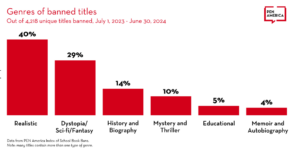
The removal of books focused on people of color, race and racism, and LGBTQ+ subjects from public schools continues as part of a concerted and dangerous campaign nationwide, according to new analysis of thousands of banned titles by PEN America. These topics are highly targeted among banned books across genres and reading levels—fiction, history, biography, memoir, even picture books.
Of the 4,218 unique banned titles in the 2023-2024 school year, 1,534 or 36% featured fictional characters or real people of color. In analyzing banned history and biography titles alone, PEN America found 44% featured people of color, with 26% of banned historical and biographical titles specifically featuring Black people. The comprehensive analysis is based on PEN America’s doumentation of the more than 10,000 instances of book bans nationwide, as school districts banned many of the same titles. The movement to ban books originated in a coordinated network of groups that also largely espouses white supremacist and Christian nationalist ideology.
The targeting of banned titles featuring people of color is happening at the same time as the population of students of color has reached an all time high—now more than half of all American schoolchildren. This is especially concerning as equity and diversity initiatives seeking to achieve more equal representation in schools are under attack by government at all levels.
Coupled with the banning of books about communities of color is the removal of titles about the LGBTQ+ community. During the 2023-2024 school year, 29% of all banned titles included LGBTQ+ characters, people, or themes. Of the banned titles with LGBTQ+ characters or people, 28% specifically featured trans and/or genderqueer characters. Also, more than half of the banned books with LGBTQ+ people or characters include communities of color, highlighting the intersectionality of attacks on marginalized groups.
Source: PEN America
Research has shown that banning books about the experiences and histories of marginalized groups of people increases feelings of exclusion and invisibility, and intensifies their risk of mental health challenges. The erasure of books about students of color in school libraries has deeply harmfulimpacts on mental health.
“This targeted censorship amounts to a harmful assault on historically marginalized and underrepresented populations — a dangerous effort to erase their stories, achievements, and history from schools,” said Sabrina Baêta, senior manager for PEN America’s Freedom to Read program. “When we strip library shelves of books about particular groups, we defeat the purpose of a library collection that is supposed to reflect the lives of all people. The damaging consequences to young people are real.”
Source: PEN America
Proponents of book bans often label titles with consensual sexual experiences as “explicit.” But PEN America found their rhetoric to be exaggerated. Out of all 4,218 unique titles examined, 31% had references to sexual experiences but with minimal detail. Only 13% described the sexual experiences “on the page”. Books with sexual content allow students to raise questions about this aspect of human experience, which can help guide them. PEN America’s analysis showed other books offering real-world experience on important topics were among those banned at higher levels— on death and grief, violence, abuse, and mental health issues.
Similarly, books about books about race and racism (20% of all banned titles) illuminate the ways in which these factors have impacted history and everyday life. Books on activism and social movements (15%) illustrate real and fictional stories about those who have worked to better the world in which they live. Books that touch on incarceration and policing (13%) can increase young people’s understanding of prison and policing systems, and foster empathy towards those impacted. Books about immigration or immigrants and refugees (7%) help raise awareness and dispel misinformation.
Gary Price (gprice@gmail.com) is a librarian, writer, consultant, and frequent conference speaker based in the Washington D.C. metro area.
He earned his MLIS degree from Wayne State University in Detroit.
Price has won several awards including the SLA Innovations in Technology Award and Alumnus of the Year from the Wayne St. University Library and Information Science Program. From 2006-2009 he was Director of Online Information Services at Ask.com.
The removal of books focused on people of color, race and racism, and LGBTQ+ subjects from public schools continues as part of a concerted and dangerous campaign nationwide, according to new analysis of thousands of banned titles by PEN America. These topics are highly targeted among banned books across genres and reading levels—fiction, history, biography, memoir, even picture books.