The advancements in Generative Artificial Intelligence (GenAI) provide opportunities to enrich educational experiences, but also raise concerns about academic integrity. Many educators have expressed anxiety and hesitation in integrating GenAI in their teaching practices, and are in needs of recommendations and guidance from their institutions that can support them to incorporate GenAI in their classrooms effectively. In order to respond to higher educators’ needs, this study aims to explore how universities and educators respond and adapt to the development of GenAI in their academic contexts by analyzing academic policies and guidelines established by top-ranked U.S. universities regarding the use of GenAI, especially ChatGPT. Data sources include academic policies, statements, guidelines, and relevant resources provided by the top 100 universities in the U.S. Results show that the majority of these universities adopt an open but cautious approach towards GenAI. Primary concerns lie in ethical usage, accuracy, and data privacy. Most universities actively respond and provide diverse types of resources, such as syllabus templates, workshops, shared articles, and one-on-one consultations focusing on a range of topics: general technical introduction, ethical concerns, pedagogical applications, preventive strategies, data privacy, limitations, and detective tools. The findings provide four practical pedagogical implications for educators in teaching practices: accept its presence, align its use with learning objectives, evolve curriculum to prevent misuse, and adopt multifaceted evaluation strategies rather than relying on AI detectors. Two recommendations are suggested for educators in policy making: establish discipline-specific policies and guidelines, and manage sensitive information carefully.
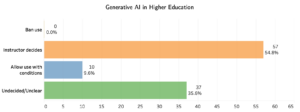
Figure 2: Policies And Stances Adopted By Different Universities Regarding GenAI Source: 10.48550/arXiv.2312.05235
Gary Price (gprice@gmail.com) is a librarian, writer, consultant, and frequent conference speaker based in the Washington D.C. metro area.
He earned his MLIS degree from Wayne State University in Detroit.
Price has won several awards including the SLA Innovations in Technology Award and Alumnus of the Year from the Wayne St. University Library and Information Science Program. From 2006-2009 he was Director of Online Information Services at Ask.com.