John W. Ayers, PhD, MA University of California, San Diego
Brian Chu, BS University of Pennsylvania, Philadelphia
Zechariah Zhu University of California, Los Angeles
Eric C. Leas, PhD, MPH University of California, San Diego
Davey M. Smith, MD, MAS University of California, San Diego
Mark Dredze, PhD Johns Hopkins University
David A. Broniatowski, PhD, SM George Washington University
Source
JAMA Internal Medicine Published online June 7, 2021 DOI: 10.1001/jamainternmed.2021.2498
From the Article:
The dangers of misinformation spreading on social media during the COVID-19 pandemic are known.1 However, software that allows individuals to generate automated content and share it via counterfeit accounts (or “bots”)2 to amplify misinformation has been overlooked, including how automated software can be used to disseminate original research while undermining scientific communication.
Source: DOI: 10.1001/jamainternmed.2021.2498
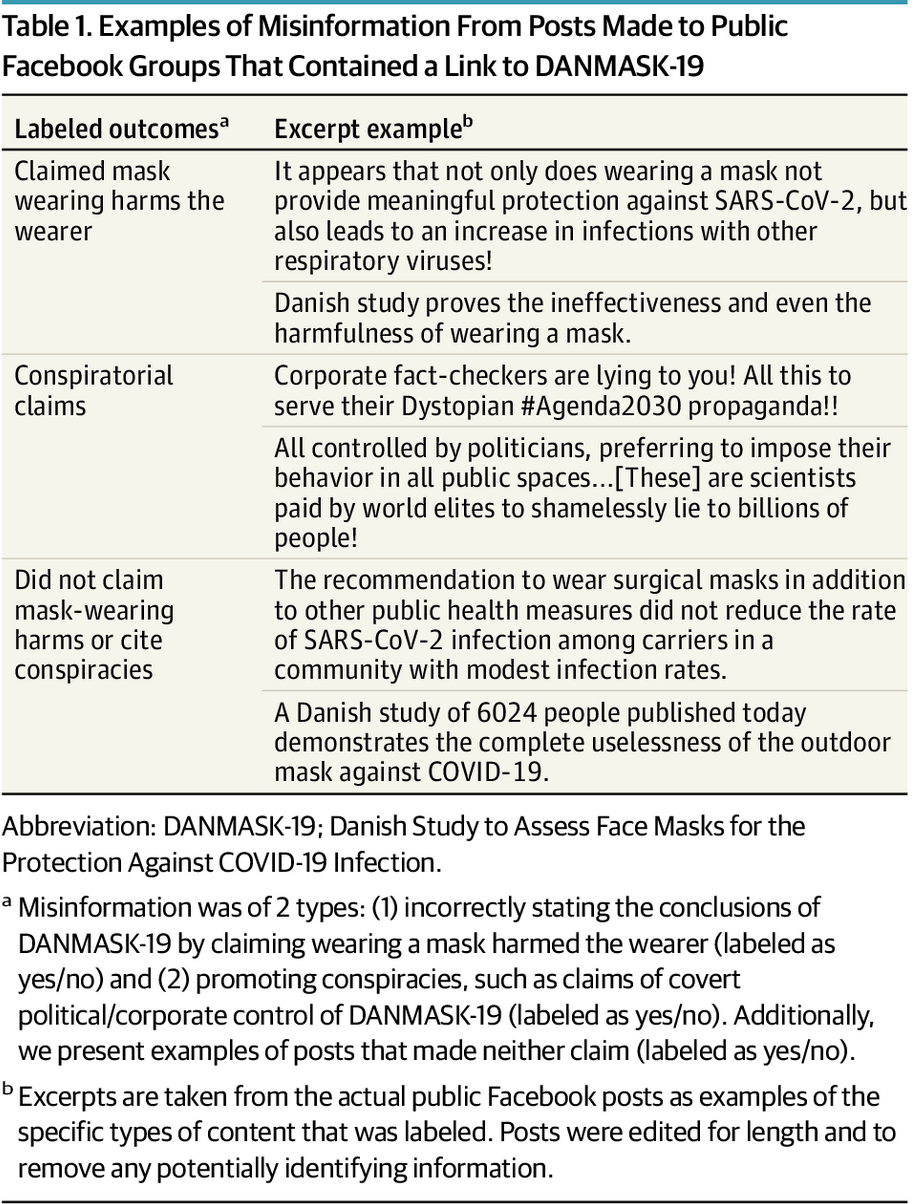
We analyzed conversations on public Facebook groups, a platform known to be susceptible to automated misinformation,3 concerning the publication of the Danish Study to Assess Face Masks for the Protection Against COVID-19 Infection (DANMASK-19) to explore automated misinformation.4 We selected DANMASK-19 because it was widely discussed (it was the fifth most shared research article of all time as of March 2021 according to Altmetric5) and demonstrated that masks are an important public health measure to control the pandemic.
Gary Price (gprice@gmail.com) is a librarian, writer, consultant, and frequent conference speaker based in the Washington D.C. metro area.
He earned his MLIS degree from Wayne State University in Detroit.
Price has won several awards including the SLA Innovations in Technology Award and Alumnus of the Year from the Wayne St. University Library and Information Science Program. From 2006-2009 he was Director of Online Information Services at Ask.com.