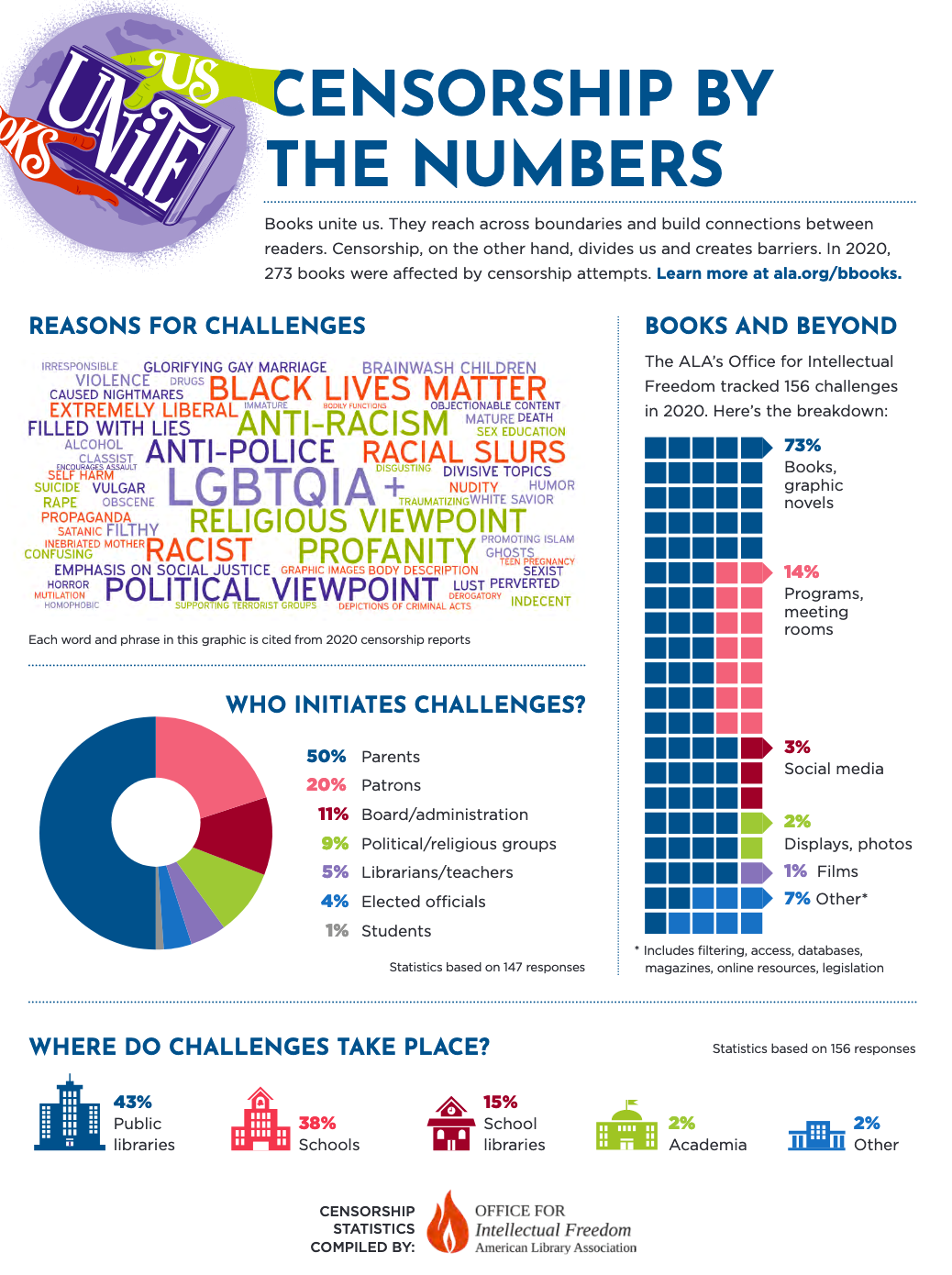
In 2020, more than 273 books were challenged or banned. Demands to remove books addressing racism and racial justice or those that shared the stories of Black, Indigenous, or people of color grew in number. At the same time, books addressing themes and issues of concern for LGBTQIA+ people continued to dominate the list.
Source: State of American Libraries 2021
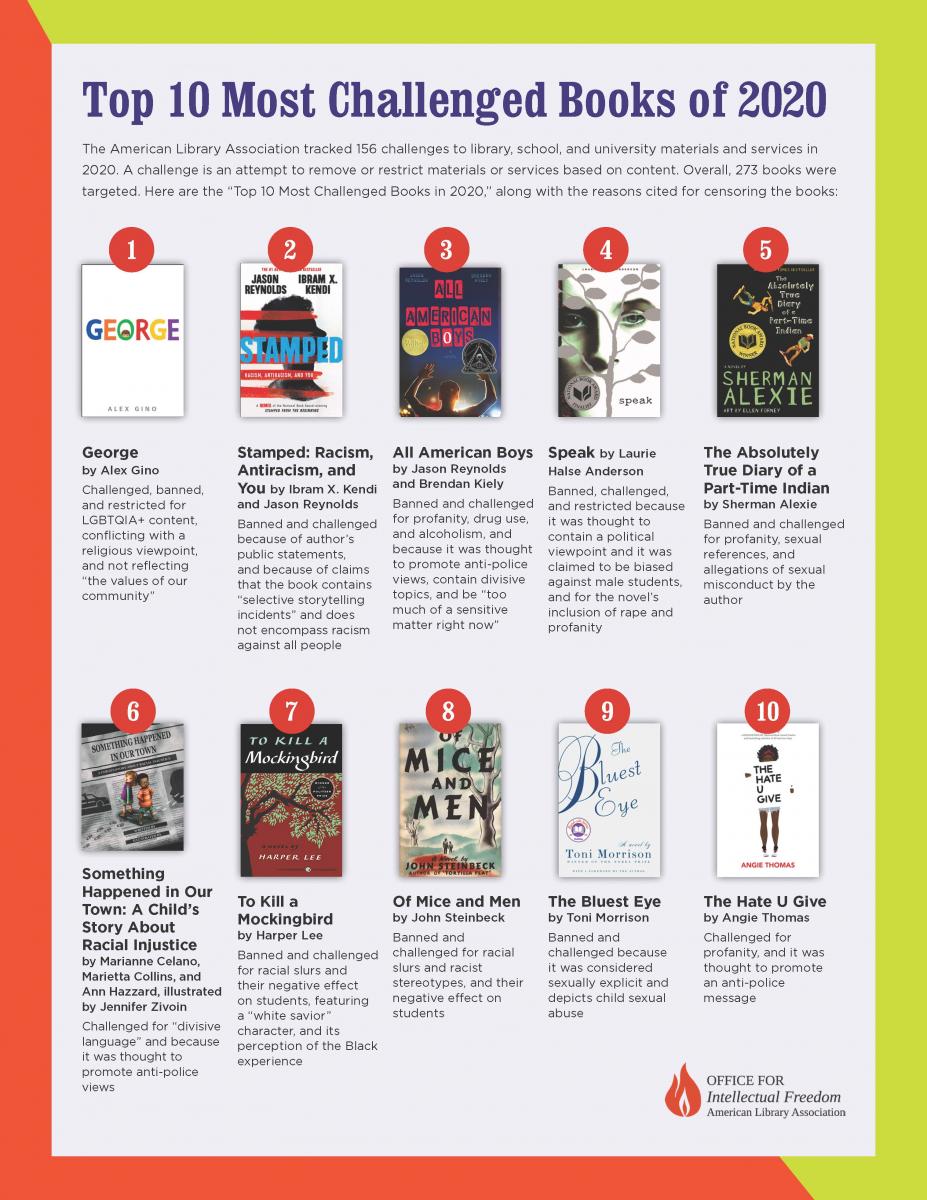
Below are the top 10 most challenged books of 2020:
1. “George,” by Alex Gino Challenged, banned, and restricted for LGBTQIA+ content, conflicting with a religious viewpoint, and not reflecting “the values of our community”
2. “Stamped: Racism, Antiracism, and You,” by Ibram X. Kendi and Jason Reynolds Banned and challenged because of the author’s public statements, and because of claims that the book contains “selective storytelling incidents” and does not encompass racism against all people
3. “All American Boys,” by Jason Reynolds and Brendan Kiely Banned and challenged for profanity, drug use, and alcoholism, and because it was thought to promote anti-police views, contain divisive topics, and be “too much of a sensitive matter right now”
4. “Speak,” by Laurie Halse Anderson Banned, challenged, and restricted because it was thought to contain a political viewpoint, it was claimed to be biased against male students, and for the novel’s inclusion of rape and profanity
5. “The Absolutely True Diary of a Part-Time Indian,” by Sherman Alexie Banned and challenged for profanity, sexual references, and allegations of sexual misconduct by the author
6. “Something Happened in Our Town: A Child’s Story About Racial Injustice,” by Marianne Celano, Marietta Collins, and Ann Hazzard, illustrated by Jennifer Zivoin Challenged for “divisive language” and because it was thought to promote anti-police views
7. “To Kill a Mockingbird,” by Harper Lee Banned and challenged for racial slurs and their negative effect on students, featuring a “white savior” character, and its perception of the Black experience
8. “Of Mice and Men,” by John Steinbeck Banned and challenged for racial slurs and racist stereotypes, and their negative effect on students
9. “The Bluest Eye,” by Toni Morrison Banned and challenged because it was considered sexually explicit and depicts child sexual abuse
10. “The Hate U Give,” by Angie Thomas Challenged for profanity, and it was thought to promote an anti-police message
Gary Price (gprice@gmail.com) is a librarian, writer, consultant, and frequent conference speaker based in the Washington D.C. metro area.
He earned his MLIS degree from Wayne State University in Detroit.
Price has won several awards including the SLA Innovations in Technology Award and Alumnus of the Year from the Wayne St. University Library and Information Science Program. From 2006-2009 he was Director of Online Information Services at Ask.com.