

New Research Article: “Prepublication Disclosure of Scientific Results: Norms, Competition, and Commercial Orientation”
The following article was published today by Science Advances.
Title
Prepublication Disclosure Of Scientific Results: Norms, Competition, And Commercial Orientation
Authors
Jerry G. Thursby
Laboratory for Innovation Science at Harvard
TyGeron Institute
Carolin Haeussler
University of Passau, Germany
Marie C. Thursby
Laboratory for Innovation Science at Harvard
National Bureau of Economic Research
Vanderbilt University
Georgia Institute of Technology
Lin Jiang
University of Missouri
University of South Florida
Source
Science Advances
16 May 2018: Vol. 4, no. 5, eaar2133
DOI: 10.1126/sciadv.aar2133
Abstract
In the basis of a survey of 7103 active faculty researchers in nine fields, we examine the extent to which scientists disclose prepublication results, and when they do, why? Except in two fields, more scientists disclose results before publication than not, but there is significant variation in their reasons to disclose, in the frequency of such disclosure, and in withholding crucial results when making public presentations. They disclose results for feedback and credit and to attract collaborators. Particularly in formulaic fields, scientists disclose to attract new researchers to the field independent of collaboration and to deter others from working on their exact problem. A probability model shows that 70% of field variation in disclosure is related to differences in respondent beliefs about norms, competition, and commercialization. Our results suggest new research directions—for example, do the problems addressed or the methods of scientific production themselves shape norms and competition? Are the levels we observe optimal or simply path-dependent? What is the interplay of norms, competition, and commercialization in disclosure and the progress of science?
Direct to Full Text Article ||| Direct to PDF Version (15 pages; PDF)
Filed under: News
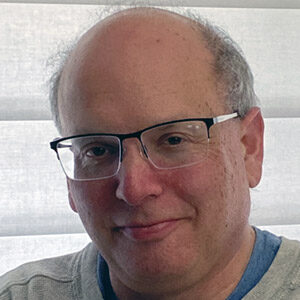
About Gary Price
Gary Price (gprice@gmail.com) is a librarian, writer, consultant, and frequent conference speaker based in the Washington D.C. metro area. He earned his MLIS degree from Wayne State University in Detroit. Price has won several awards including the SLA Innovations in Technology Award and Alumnus of the Year from the Wayne St. University Library and Information Science Program. From 2006-2009 he was Director of Online Information Services at Ask.com.
ADVERTISEMENT
Archives

ADVERTISEMENT