For years scientists in fields from climate change to biodiversity to hydrology have used older data to address contemporary issues. Since the 1960s researchers, recognizing the value of this data, have expressed concern about its management and potential for loss. No widespread solutions have emerged to address the myriad issues around its storage, access, and findability. This paper summarizes observations and concerns of researchers in various disciplines who have articulated problems associated with analog data and highlights examples of projects that have used historical data. The authors also examined selected papers to discover how researchers located historical data and how they used it. While many researchers are not producing huge amounts of analog data today, there are still large volumes of it that are at risk. To address this concern, the authors recommend the development of best practices for managing historic data. This will take communication across disciplines and the involvement of researchers, departments, institutions, and associations in the process.
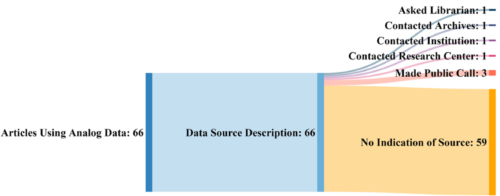
Figure 1 Description of sources of historic data for scientific researchers who had re-used it in publications. Scientific papers (N = 66) that illustrated evidence of use of this data were examined to determine the source of the data and how it was identified and located by the researchers. Source: 10.5334/dsj-2022-014
Gary Price (gprice@gmail.com) is a librarian, writer, consultant, and frequent conference speaker based in the Washington D.C. metro area.
He earned his MLIS degree from Wayne State University in Detroit.
Price has won several awards including the SLA Innovations in Technology Award and Alumnus of the Year from the Wayne St. University Library and Information Science Program. From 2006-2009 he was Director of Online Information Services at Ask.com.