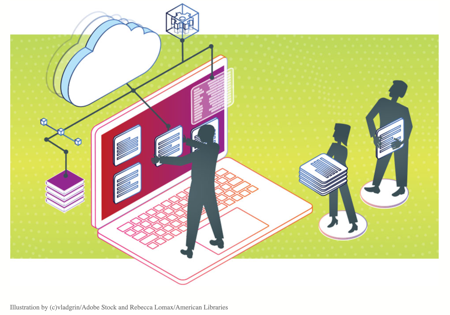
The library technology industry, broadly speaking, shows more affinity toward utility than innovation. Library automation systems are not necessarily exciting technologies, but they are workhorse applications that must support the complex tasks of acquiring, describing, and providing access to materials and services. They represent substantial investments, and their effectiveness is tested daily in the library. But more than efficiency is at stake: These products must be aligned with the priorities of the library relative to collection management, service provision, and other functions.
Source: American Libraries
Outdated automation systems can reinforce work patterns that no longer reflect priorities as core library activities change. Bursts of innovation can create new products better aligned with current library realities. The products that emerge out of these creative booms then become mainstays that support the next phase of library operations. The academic library sector can be seen as a cycle of innovation that began eight years ago with the inception of an automation product substantially different from previous systems. The trajectory of innovation for public and school libraries has followed a different course, characterized by incremental change layered on top of longstanding systems with aging architectures.
The report is organized into the following sections:
Gary Price (gprice@gmail.com) is a librarian, writer, consultant, and frequent conference speaker based in the Washington D.C. metro area.
He earned his MLIS degree from Wayne State University in Detroit.
Price has won several awards including the SLA Innovations in Technology Award and Alumnus of the Year from the Wayne St. University Library and Information Science Program. From 2006-2009 he was Director of Online Information Services at Ask.com.